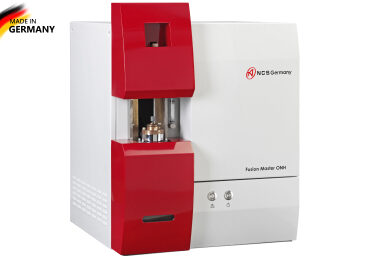
Main Features of the Device
Dual-view ICP-OES system delivers superior sensitivity and a wide dynamic range.
low background interference, enabled by a cooled cone that removes the plasma tail.
Solid-state RF generator ensures stability, low noise, and energy efficiency.
Echelle polychromator for simultaneous and rapid analysis
Advanced sampling system supports high-salinity, organic solvent, and hydrofluoric acid matrices.
User-friendly software with built-in spectral line library and simplified method development.
Integrated safety protection system: EMC shielding, interlocking door, and UV-proof viewing window.
Structure and Function
Optical System:
CaF₂ prism improves light throughput and sensitivity.
Optimized aspherical optical elements prevent astigmatism for sharper images.
Temperature-stabilized chamber (38 °C ± 0.1 °C) ensures long-term optical stability.
Purged echelle polychromator reduces gas stabilization time and boosts UV detection sensitivity.
Sampling System:
Multiple sample introduction kits for diverse matrices (organic, saline, HF-containing).
Mass Flow Controllers (MFCs) regulate cooling, auxiliary, and carrier gas for consistent plasma conditions.
12-roller peristaltic pump ensures steady and accurate sample delivery.
Removable or integrated torch allows fast maintenance and low-cost replacement.
RF Generator:
Self-excited solid-state RF generator (27.12 MHz, 500–1600 W).
Power stability ≤ 0.1 %, adjustable in 1 W steps.
Compact and efficient design with green standby mode to lower gas and power consumption.
Monitored via high-performance CAN industrial field bus for stable communication and system control.
Detector:
Large-area back-illuminated CCD (1024 × 1024 pixels, 24 μm × 24 μm per pixel).
Triple-stage Peltier cooling to −30 °C for reduced noise and enhanced UV performance.
Anti-blooming design, wide dynamic range, and high quantum efficiency.
Captures full spectral data in one exposure for rapid multi-element analysis.
Software:
Intuitive, humanized interface for fast setup and operation.
Built-in spectral line database helps identify interference elements and select accurate wavelengths.
Simple observation mode settings and result visualization for efficient analytical workflows.
Specialized Applications
According to official NCS sources, the Plasma 3000 ICP-OES is ideal for:
Metallurgy and alloy composition analysis
Geological and mineral studies
Materials research and quality control
Environmental and wastewater monitoring
Food and agricultural testing
Pharmaceutical and medical research
Petroleum and chemical industry applications
Biological and ecological sample analysis
Water quality assessment
Limitations
Designed only for liquid samples — not suitable for solids or gases.
Requires high-purity argon gas for plasma generation.
No auto-sampler or robotic sample feeding system mentioned.
No explicit data export or connectivity interface specified (USB, Ethernet, etc.).
No information provided on calibration procedures, certifications, or compliance standards.
Configuration Options
The NCS Plasma 3000 ICP-OES is available as a single main model with several optional configurations:
Dual-view (Axial/Radial) observation system – standard configuration.
Sampling system kits for organic solvents, saline samples, and HF-containing solutions.
Torch options – removable or integrated types for easy maintenance.
Integrated gas flow control via Mass Flow Controllers (MFCs) for precision and consistency.
Design and Performance Features
Parameter | Specification |
Spectral Range | 165 – 870 nm |
Resolution | 0.006 nm @ 200 nm |
Detection Limit | sub-ppb to ppb range |
Short-Term Stability | RSD ≤ 0.5 % (500 LOD) |
Long-Term Stability | RSD ≤ 1.0 % (4 h, 500 LOD) |
Temperature Control | 38 °C ± 0.1 °C |
RF Output Power | 500 – 1600 W (adjustable by 1 W) |
Power Stability | ≤ 0.1 % |
Operating Environment | Humidity 20–80 %, Argon purity > 99.95 %, Air exhaust ≥ 400 m³/h |
Power Supply | 220–240 V, single phase, 50–60 Hz, 4 kVA |
Dimensions (W × D × H) | 106 cm × 67 cm × 75 cm |
Weight | 180 kg |
Detector Cooling | Triple-stage Peltier, −30 °C |
Data Capture | Single exposure, full-spectrum |
Energy Efficiency | Green standby mode reduces gas and power use |