To safely enhance octane ratings and effectively mitigate engine knocking, oxygenated additives like alcohols and ethers are routinely blended into commercial gasoline. Because these crucial anti-knock agents directly influence both vehicle emissions and overall engine performance, their concentrations are strictly governed by international regulations. Consequently, ensuring highly accurate and reproducible analysis of these compounds is an absolute necessity for modern refineries to maintain fuel quality and compliance.
The GAS Oxygenates Analyser presents a highly customizable, robust solution designed specifically to tackle these rigorous analytical demands. When configured for ASTM D4815, the instrument utilizes a premium 10-port diaphragm valve—safely housed in an independently heated isothermal oven to prevent condensation and cold spots. The sample passes through a highly polar micro-packed TCEP column to retain the oxygenates while venting light hydrocarbons. These retained compounds are then directed to a non-polar wide-bore column for boiling point separation, followed by a precise backflush of the heavier fractions.
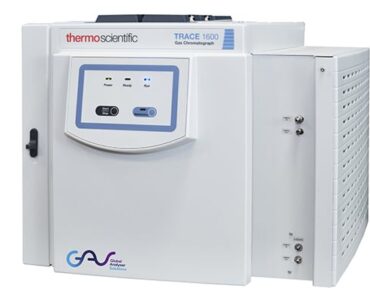
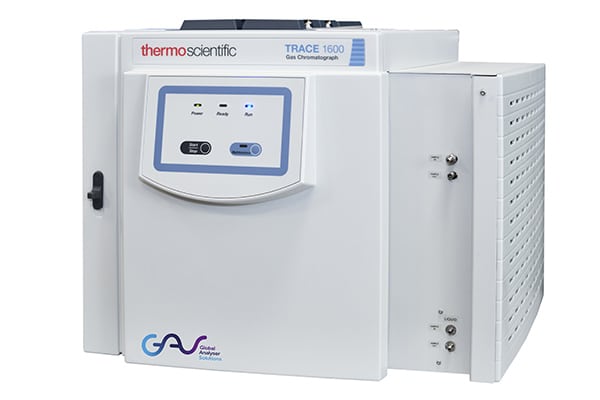
Alternatively, the EN 13132 configuration employs two narrow-bore capillary columns coupled with a sophisticated Deans Heartcut switch, transferring multiple specific fractions to achieve exceptional chromatographic selectivity. Both setups utilize completely inert Sulfinert® tubing to prevent sample adsorption and rely on highly sensitive Flame Ionisation Detection (FID). Built on the versatile Thermo Trace 1600 GC, this system also offers the distinct advantage of consolidating multiple methodologies—such as ASTM D3606 and D5580—into a single, highly efficient instrument, drastically reducing the laboratory footprint while maximizing the overall return on investment.
Benefits
Full Standards Compliance: Expertly designed to completely satisfy the rigorous analytical requirements of both EN 13132 and ASTM D4815 for detecting oxygenated components in gasoline.
Highly Selective Separation: Utilizes advanced heartcut techniques and sophisticated column switching to guarantee the dependable, interference-free identification of critical oxygenates.
High Uptime and Long Valve Lifetime: Features premium diaphragm valves housed within an independently heated isothermal valve oven, effectively eliminating cold spots and drastically reducing maintenance needs.
Flexible and Scalable Configuration: Provides the unique ability to seamlessly integrate multiple standardized fuel analysis procedures into one highly cohesive and efficient instrument.
| Category | Specification |
|---|---|
| Analyser Platform | Thermo Trace 1600 GC series |
| Detector Type | Flame Ionisation Detector (Single FID for D4815, Double FID for EN 13132) |
| Injection System | SSL (Split-splitless injector) with optional Automated liquid sample injector |
| Column Setup (ASTM D4815) | Micro-packed TCEP column and a non-polar wide-bore column with 10-port switching valve |
| Column Setup (EN 13132) | Two narrow-bore capillary columns (TCEP + Rtx-1) with Deans Heartcut switch |
| Target Components | Organic oxygenates (alcohols and ethers) in liquid gasoline |
| Sample Pathway | Completely inert Siltek®/Sulfinert® treated tubing |
| Dynamic Range (D4815) | Alcohols: 0.1 – 12 mass% | Ethers: 0.1 – 20 mass% |
| Analysis Runtime | 25 minutes (ASTM D4815) / 35 minutes (EN 13132) |
| Repeatability | > 2% RSD (n=10) |
| Software System | Chromeleon (and OpenLab for D4815) |
Fuel Quality Control: Consistently verify that oxygenated additives within commercial gasoline batches strictly comply with established regulatory limits and specifications.
Refinery and Blending Operations: Facilitate the optimization of blending processes by closely monitoring the exact concentrations of oxygenates throughout fuel formulation.
Regulatory and Specification Testing: Execute standardized, highly accurate oxygenate analyses required for official fuel certification and environmental reporting purposes.
Multi-Method Fuel Analysis: Optimize laboratory capabilities and conserve bench space by seamlessly combining oxygenate testing with other essential methodologies, such as ASTM D5580 and D3606, within a single GC framework.
The analyser is fully designed to comply with the following major industry standards:
ASTM D4815
EN 13132