In olefin processing and polymer production facilities, the presence of trace contaminants—such as phosphine, arsine, carbonyl sulphide (COS), and hydrogen sulphide (H₂S)—poses a severe operational threat. Even when present at microscopic ppb concentration levels, these highly reactive impurities can induce irreversible poisoning of the precious metal catalysts utilized downstream. Therefore, possessing the capability to accurately monitor and mitigate these contaminants is essential for maintaining final product quality and extending valuable catalyst lifespans.
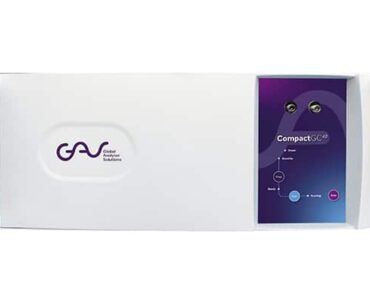
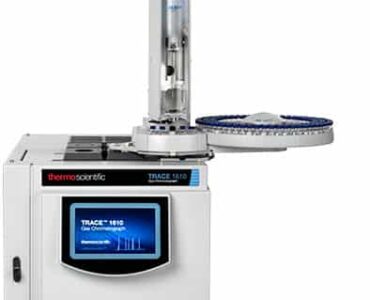
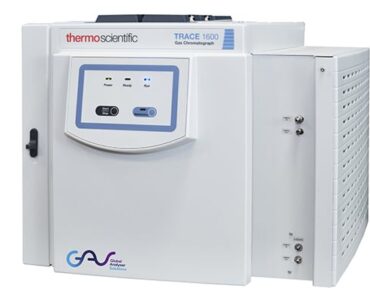
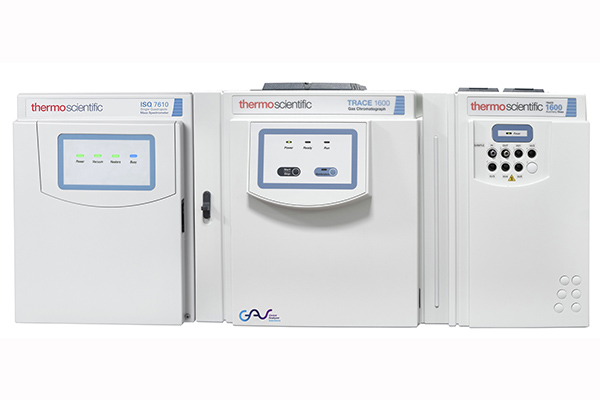
Addressing these rigorous demands, the GAS Ultra-Trace Analyser provides a cutting-edge, single-run analytical solution. The instrument is engineered around the Thermo Trace GC1600 platform integrated tightly with an ISQ 7610 GC-MS. During operation, the gas sample is introduced via a Gas Sampling Valve (GSV) directly onto a high-resolution capillary column, which effectively separates the targeted impurities from the bulk matrix peaks. For maximum analytical sensitivity, the mass spectrometer utilizes an Advanced Electron Ionisation (AEI) source combined with Selected Ion Monitoring (SIM) acquisition, successfully driving detection limits below the 1 ppb threshold. To ensure the active compounds are not lost or degraded during transit, the entire internal pathway utilizes completely inert Sulfinert® tubing. Ultimately, this system delivers exceptional analytical reliability with outstanding repeatability (< 5% at 10 ppb) and strong linearity, further simplified by an integrated Automatic Calibration Unit to reduce manual preparation errors.
Benefits
Sub-ppb Detection Limits: Attain unparalleled analytical sensitivity, achieving limits of detection well below 1 ppb for COS, H₂S, phosphine, and arsine by utilizing the powerful GC-MS and AEI source combination.
Single Method, Single Run: Streamline operations and significantly reduce analytical runtime by comprehensively evaluating all targeted contaminants within one cohesive chromatographic run.
Automated Calibration: Eliminate the complexities of manual gas preparation through an Automatic Calibration Unit (ACU) that employs permeation tubes for highly accurate, multi-level system calibration.
Excellent Linearity and Repeatability: Experience highly dependable results across the 2–50 ppb range, characterized by repeatability under 5% RSD and exceptional linearity (R² up to 0.999).
Inert Sample Path Design: Prevent the unwanted adsorption of highly reactive hydride and sulfur compounds by utilizing optimized flow pathways constructed with premium Sulfinert® tubing.
| Category | Specification |
|---|---|
| Analyser Platform | Thermo Trace GC1600 |
| Target Components | H₂S, COS, arsine, and phosphine |
| Supported Matrices | Ethylene and propylene (olefin feedstocks) |
| Detector Type | ISQ 7610 GC-MS with Advanced Electron Impact (AEI) source |
| Injection System | Gas Sampling Valve (GSV) with optional GAS Vaporiser for liquefied samples |
| Column Setup | High-resolution capillary column |
| Data System | Chromeleon chromatography data system |
| Calibration Unit | Automatic Calibration Unit (ACU) with permeation tubes |
| Limit of Detection | < 1 ppb |
| Repeatability | < 5% RSD at 10 ppb level |
| Linearity | R² > 0.996 (range 2–50 ppb) |
Olefin Feedstock Quality Control: Precisely identify ultra-trace levels of phosphine, arsine, and sulfur contaminants within propylene and ethylene flows to actively safeguard sensitive polymerization catalysts.
Catalyst Protection and Lifetime Extension: Pinpoint and monitor microscopic ppb-level impurities that are responsible for the irreversible deactivation of catalysts in downstream processing infrastructure.
Polymer Production Monitoring: Authenticate the absolute purity of feed gases to guarantee continuous, stable, and highly efficient polymerization operations.
Refinery and Petrochemical Laboratories: Execute exceptionally sensitive trace compound analysis leveraging a robust, fully validated GC-MS analytical framework.
Method Development and Research: Facilitate cutting-edge research and development initiatives through the reliable detection of multiple trace components within a streamlined, single-run procedure.
The analyser’s core methodology is fully designed around the principles of the Costumer Demands.