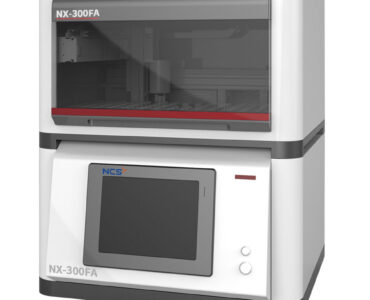
Main Features of the Device
Sequential Wavelength Dispersive X-ray Fluorescence Spectrometer (WDXRF) for high-precision, non-destructive elemental analysis.
Measures elements ranging from Na to U (Uranium) with a wide dynamic range (ppm–100%) and low detection limits.
High stability and high precision X-ray source (4 kW, 60 kV, 150 mA) ensuring low detection limits, fast analysis, and extended tube life.
Short optical path design for higher count rates and superior detection efficiency.
Configurable optical components: up to 10 filters, 10 diaphragms, 4 primary collimators, and 10 dispersive crystals.
Reliable θ–2θ goniometer system, independently driven, providing high accuracy and long-term mechanical stability.
Automatic power adjustment program and integrated cooling system for enhanced operational safety and durability.
Energy Dispersive (EDXRF) function (optional) with SDD detector integration for faster data collection and hybrid WD–ED analysis.
Automated sample handling system: 1/48-position autosampler with robotic option.
User-friendly software interface with automatic calibration, multiple built-in algorithms, and support for both qualitative and quantitative analysis.
Non-destructive testing, minimal sample preparation, and simultaneous multi-element capability.
Structure and Function
X-ray Source and Power System
High-voltage generator: 60 kV, 150 mA, 4 kW power.
Long-term stability: 0.01%, ensuring consistent accuracy over extended operation.
Equipped with an integrated cooling water unit for reliable X-ray tube protection.
Automatic power adjustment optimizes efficiency and extends component life.
X-ray Tube
End-window type, with optional targets: Rh, Cu, Mo, W, Cr, Pt.
Beryllium window thickness: 50 µm or 75 µm (selectable).
Optical Path Design
Short optical path maximizes signal strength.
Up to 10 filters, 10 diaphragms, and 4 collimators available.
Dispersive crystal exchanger (10-position) supports LiF200, LiF220, PET, Ge, and multilayer crystals.
Goniometer
Independent θ–2θ drive system with mature feedback and transmission technology.
Scan range: SC (1–118°), PC (10–148°).
Step angle: 0.001° – 0.1°.
Sample Handling
Polar coordinate sample stage with rotation (spin) function.
Accommodates solid samples up to φ 50 mm × H 30 mm.
Automatic sampler (1/48-bit) or robotic autosampler available.
Double vacuum system for analytical and sampling chambers; helium purge system optional (for liquid samples).
Detection System
Scintillation counter (SC) and flow-gas proportional counter (F-PC) detectors.
Optional SDD detector for combined WD–ED analysis.
Maintained at 36.5 °C ± 0.1 °C with internal thermostat for signal stability.
Software
Intuitive, user-friendly interface.
Automatic calibration, method setup, and testing sequences.
Built-in quantitative and qualitative analysis algorithms.
Provides real-time feedback and supports efficient workflow management.
Specialized Applications
The CNX-838 is specifically designed for elemental analysis in the following sectors:
- Geology — Determination of elemental composition in rock, mineral, and fused bead samples; supports both preformed and fused sample types.
- Building Materials — Precise analysis of cement, coatings, and other construction materials.
- New Materials — Non-destructive and comprehensive analysis of novel alloys and compounds, including full elemental distribution mapping.
- Ecological & Environmental Studies — Measurement of heavy metals and trace elements in soil, water, sediments, airborne particulates, and plants.
Provides reliable data for environmental monitoring and pollution assessment.
Limitations
- Requires vacuum conditions — not suited for field analysis or portable use.
Configuration Options
Component | Available Options |
X-ray Tube Target | Rh, Cu, Mo, W, Cr, Pt |
Beryllium Window Thickness | 50 µm / 75 µm |
Filters | Up to 10 types (Ti, Zr, Cu, Al etc.) |
Diaphragm Sizes | φ 35 – 0.5 mm (plus attenuator) |
Collimators | 150 – 3000 µm (max 4) |
Dispersive Crystals | Up to 10 exchangeable positions |
Detector Configuration | SC + F-PC standard; optional SDD detector |
Sample Handling | 1/48 autosampler or robotic sampling system |
Atmosphere Options | Double vacuum system; optional helium-filled analytical chamber |
Add-on Accessories | CCD imaging system for distribution analysis |
Design and Performance Features
Feature | Specification |
Measurement Range (Elements) | Na(11) – U(92) |
Dynamic Range | ppm – 100 % |
X-ray Source | 4 kW high-voltage generator, 60 kV, 150 mA |
Long-term Power Stability | 0.01 % |
Resolution | 0.01 nm |
Spectral Range | 0.01 – 50 keV |
Sample Size | φ 50 mm × H 30 mm |
Goniometer Drive | Independent θ–2θ drive |
Scan Range | SC 1–118°, PC 10–148° |
Step Angle Options | 0.001°, 0.002°, 0.005°, 0.01°, 0.02°, 0.05°, 0.1° |
Collimators | 150 – 3000 µm, up to 4 configurations |
Dispersive Crystals | LiF200, LiF220, PET, Ge, Multilayer |
Filters | Ti, Zr, Cu, Al, and others (up to 10 filters) |
Detectors | Scintillation Counter (SC), Flow-Gas Proportional Counter (F-PC) |
Optional Detectors | Silicon Drift Detector (SDD) for hybrid WD–ED analysis |
Vacuum System | Double vacuum chamber design |
Thermostat | 36.5 °C ± 0.1 °C |
Optional Accessories | Helium purge system (liquid samples), CCD camera for distribution analysis |
Instrument Class | Class A (JJG 810-1993 Verification Regulations) |