Detailed Hydrocarbon Analysis (DHA) has long been a foundational technique for assessing biofuels, blend stocks, and petroleum products. However, traditional methodologies relying heavily on GC-FID technology often suffer from lengthy analysis times, complex chromatographic separation requirements, and the need for tedious manual data reviews to resolve co-eluting components. These limitations can bottleneck refinery and laboratory operations, necessitating a more streamlined and reliable analytical approach.
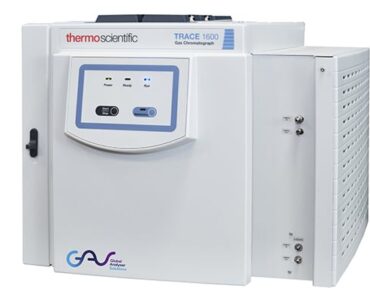
The GAS Verified Hydrocarbon Analysis (VHA) solution fundamentally transforms this process by substituting traditional detectors with advanced Vacuum Ultraviolet (VUV) spectroscopy. Operating on the Thermo Trace GC1600 platform, the system captures highly structured, three-dimensional GC-VUV absorbance data (wavelength, absorbance, and time) that is distinct for specific chemical structures. This inherent capability allows the powerful VUV-Analyze™ software to easily deconvolve overlapping spectral responses, delivering flawless component identification even when compounds perfectly co-elute.
With a comprehensive database containing up to 700 individual components—including critical oxygenates like MTBE, TAME, and various alcohols—the system provides a robust classification of 100% of spectral responses. By leveraging this rich spectral data, the analyzer is able to utilize a shorter 60-meter column rather than the traditional 100-meter version, dramatically cutting the analytical runtime from the typical three hours down to just 45 minutes. Ultimately, VHA provides an elegant, single-method replacement for multiple legacy DHA standards, eliminating extended manual reviews while ensuring unparalleled analytical accuracy.
Benefits
Superior Alternative to Classic DHA: Minimizes analytical errors by relying on distinct VUV spectral identification rather than depending solely on retention times.
Replaces Multiple Traditional Methods: Consolidates workflows by allowing a single VHA method to replace several classical DHA standards, including ASTM D5134, D6729, D6730, and D6733.
Extensive Component Identification: Capable of fully characterizing PIONA groups and identifying up to 700 individual components within a given sample.
Faster Analysis Time: Achieves a complete VHA analysis in just about 45 minutes, a significant improvement over the several hours typically required for traditional DHA runs.
Automated Data Processing: Eliminates time-consuming manual data reviews, shortening the review process to just 2-3 minutes compared to the typical 30+ minutes required previously.
Improved Accuracy and Reliability: Leverages spectral deconvolution to ensure the robust, confident identification of co-eluting compounds with minimal human intervention.
| Category | Specification |
|---|---|
| Analyser Platform | Thermo Trace GC1600 |
| Detector Type | VUV VGA-100 Detector |
| Injection System | iConnect SSL (Split-splitless injector) |
| Oven Configuration | Equipped with cryogenic oven cooling |
| Column Setup | 60m capillary column |
| Software System | VUV-Analyze™ software |
| Analysis Runtime | Approximately 45 minutes |
| Reporting Capabilities | Individual components (up to 700), PIONA groups, and physical parameters |
Detailed Hydrocarbon Analysis (DHA): Accurately identify and quantify individual hydrocarbons alongside broader compound classes featuring final boiling points of up to 225 °C.
PIONA Group Type Reporting: Automatically generates comprehensive reports detailing the presence of paraffins, iso-paraffins, olefins, naphthenes, aromatics, and oxygenates.
Gasoline and Blend Stock Analysis: Perfectly suited for the thorough evaluation of various refining streams including alkylates, reformates, naphthas, finished fuels, and FCC gasoline.
Biofuels and Oxygenated Fuels: Effectively analyzes complex fuels containing a range of oxygenates such as MTBE, ETBE, TAME, methanol, and ethanol.
Refinery and R&D Laboratories: Empowers laboratories to conduct highly advanced hydrocarbon characterization with streamlined workflows and drastically reduced turnaround times.
The analyser is fully designed to comply with the following major industry standards:
ASTM D8369
EN 18015