Volatile Organic Compounds (VOCs) are ubiquitous in almost every atmosphere. While many are highly toxic and strictly regulated by international environmental standards, others can cause significant nuisance even at extremely low odor thresholds. Therefore, achieving ultra-low detection limits is critical for environmental monitoring, workplace safety compliance, and material emissions testing.
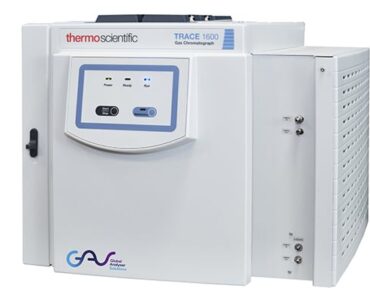
The GAS Thermal Desorption Analyser specifically addresses these rigorous analytical requirements without the logistical burdens of traditional cooling agents like liquid nitrogen or carbon dioxide. Utilizing an electrically cooled Peltier trap, the system accurately draws sample volumes ranging from 25 mL to 1 liter using a built-in pump and mass flow controller. Following the sampling phase, the trap is selectively purged with inert gas to remove water and air, preventing analytical interference. The multi-bed trap is then rapidly heated at a rate of 100 °C per second, releasing the pre-concentrated components into a low-mass, nickel-wire-wrapped programmable column capable of heating up to 500 °C per minute. This highly efficient, automated process guarantees extremely sharp injection bands and rapid, unattended analyses across a wide spectrum of boiling points.
Benefits
PPB-PPT Level Sensitivity: Advanced thermal desorption preconcentration empowers laboratories to confidently detect and quantify ultra-trace components at parts-per-billion and parts-per-trillion levels.
Electrically Cooled Trap: Utilizes Peltier cooling technology to entirely eliminate the need for cumbersome liquid nitrogen or CO₂, enabling fully automated, unattended continuous operation.
Fast Analysis and Narrow Injection Bands: Achieves rapid trap heating rates of up to 100 °C per second, guaranteeing extraordinarily sharp chromatographic peaks and drastically accelerated GC analysis.
Multi-Bed Trap Technology: Employs easily exchangeable, multi-bed adsorbent traps that feature increasing trapping power to effectively capture and analyze components spanning a wide boiling point range.
Compact and Robust Design: Integrates the entire pre-concentration trap and associated hardware into a standard, highly robust 19-inch enclosure based on proven CompactGC4.0 technology, minimizing laboratory space requirements.
| Category | Specification |
|---|---|
| Analyser Platform | CompactGC4.0 integrated with an electrically cooled thermal desorption trap |
| Detector Options | FID, TCD, PDD, PFPD, MS, and VUV-LUMA |
| Trap Temperature Range | Low: 0 to 50 °C | Desorption: 50 to 350 °C |
| Trap Heating Rate | 100 °C per second |
| Programmable Column Oven | 40 to 350 °C with a heating rate up to 500 °C/min |
| Flow Path | Inert Sulfinert® tubing and glass trap (temperature controlled from 40 to 140 °C) |
| Dynamic Range | ppt to ppm (dependent on sample volume and sorbent interaction) |
| Repeatability | < 5% RSD (internal sample pump) | < 0.5% RSD (pressurised sample) |
| Available Traps | Multiple exchangeable multi-bed traps (e.g., General-purpose, Air toxics, Greenhouse gases, Chemical warfare) |
Air Monitoring and Environmental Analysis: Accurately evaluate volatile organic compounds across diverse environments, including ambient, indoor, and outdoor air monitoring programs.
Workplace and Occupational Safety: Protect personnel and ensure regulatory compliance by detecting hazardous and highly toxic volatile compounds at critically low concentration thresholds.
Material Emissions Testing: Thoroughly analyze outgassing and trace emissions originating from consumer products, automotive interiors, and various construction materials.
BTEX and Air Toxics Analysis: Confidently quantify critical air toxics such as benzene, toluene, ethylbenzene, and xylenes by pairing thermal desorption with high-sensitivity FID or MS detection.
Food, Forensic and Defence Applications: Execute highly specialized, trace-level VOC evaluations tailored for rigorous security assessments, forensic investigations, and food quality testing.
The analyser’s core methodology is fully designed around the principles of the Costumer Demands.