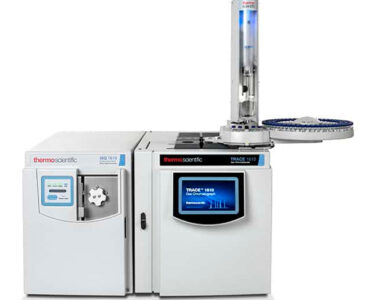
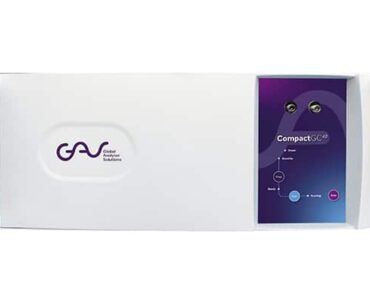
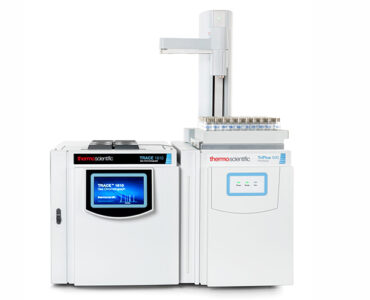
The GAS Battery Swelling Gas Analyser provides a fast and highly detailed analytical solution for monitoring gases generated inside lithium-ion batteries during charge and discharge cycles. Gas evolution within a battery can indicate degradation mechanisms, electrolyte decomposition, safety hazards, and changes in electrochemical performance. By accurately characterising these gases, manufacturers and researchers can gain valuable insights into battery health, lifespan, and failure modes.
The analyser utilizes a three-channel gas chromatography configuration consisting of two Thermal Conductivity Detector (TCD) channels for permanent gases and one Flame Ionisation Detector (FID) channel for hydrocarbon analysis. The FID channel operates with a programmable oven, enabling detailed separation and identification of hydrocarbons from C₁ to C₆, with optional extension up to C₁₀. This configuration provides a comprehensive gas profile covering both permanent gases and volatile organic compounds generated during battery operation.
To address the challenge of limited gas volumes available from battery swelling tests, the analyser incorporates an advanced vacuum sampling system. The sample loop is evacuated before sampling, allowing direct gas extraction from battery cells or syringe injection while minimizing sample consumption and preventing cross-contamination. As a result, only 1–2 ml of gas sample is required for a complete analysis.
The system is available with manual syringe injection or an optional syringe autosampler for automated high-throughput testing environments. Combined with Chromeleon CDS software, programmable temperature control, and robust diaphragm valve technology, the analyser delivers reliable, repeatable, and efficient operation for battery research laboratories, quality assurance facilities, and manufacturing environments.
Benefits:
Instant Insight into Battery Condition: Comprehensive gas analysis provides immediate information about battery performance, degradation, and safety status.
Minimal Sample Volume Requirement: Advanced vacuum sampling technology requires only 1–2 ml of gas sample for complete analysis.
Flexible Sampling Options: Supports both direct battery sampling and syringe-based sampling, with optional autosampler integration for high-throughput testing.
Three-Channel Analytical Design: Dual TCD channels analyse permanent gases while the FID channel delivers detailed hydrocarbon profiling up to C₁₀.
High Sensitivity and Reproducibility: Optimised detector configuration and programmable temperature control ensure consistent and reliable results.
Low Cross-Contamination Risk: Pre-evacuated sampling loops reduce contamination and preserve sample integrity.
| Parameter | Specification |
|---|---|
| Analyser Type | Battery Swelling Gas Analyser |
| GC Platform | GAS CompactGC4.0 |
| Detectors | Dual Thermal Conductivity Detectors (TCD) and Single Flame Ionisation Detector (FID) |
| Hydrocarbon Analysis Range | C₁–C₆ (extendable to C₁₀) |
| Columns | Five Capillary Columns |
| Valve Configuration | Three Heated 6-Port Diaphragm Valves (Rotary Valves Optional) |
| Sampling Method | Vacuum Sampling |
| Sample Volume Required | 1–2 ml |
| Injection Options | Direct Battery Sampling or Syringe Injection |
| Autosampler | Optional Syringe Autosampler |
| Oven Type | Programmable Temperature-Controlled Oven |
| Runtime | Approximately 5 Minutes |
| Data System | Chromeleon CDS |
Battery Safety and Degradation Studies: Analyse gases generated during battery swelling to evaluate aging mechanisms, thermal runaway risks, electrolyte decomposition, and overall battery safety.
Charge and Discharge Cycle Monitoring: Monitor gas formation throughout cycling experiments to study electrochemical reactions, SEI layer stability, and long-term cell performance.
Research and Material Development: Support the development of advanced electrolytes, separators, cathode materials, and anode materials through detailed gas-phase analysis.
Failure Analysis and Diagnostics: Identify abnormal gas signatures associated with contamination, manufacturing defects, internal short circuits, or cell malfunctions.
Quality Control in Battery Production: Detect early-stage swelling behaviour and verify cell integrity through rapid and reproducible gas composition measurements.
Battery Performance Validation: Correlate gas generation profiles with capacity retention, efficiency, and battery lifetime to improve product reliability.
- Designed for lithium-ion battery gas analysis and swelling studies.
- Suitable for battery safety, degradation, research, development, and quality control applications.
- Based on proven gas chromatography technology with TCD and FID detection.
- Integrated with Chromeleon Chromatography Data System (CDS).
- Supports laboratory and production-scale battery testing environments.
- Vacuum sampling design minimizes sample loss and cross-contamination for reliable analytical results.